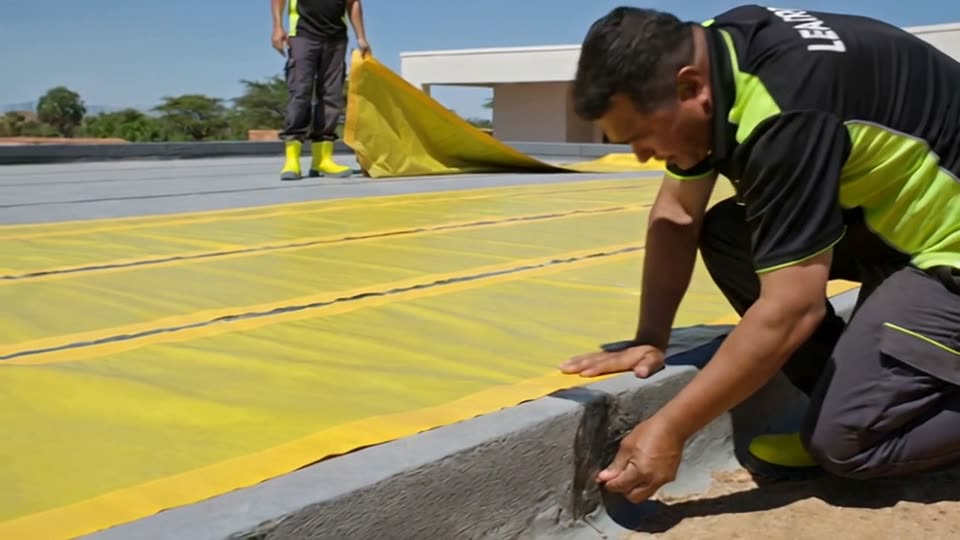
Torch on waterproofing Cape Town uses bitumen membrane sheet, unrolled and bonded to the substrate with a gas torch. It is the default system for flat and low-slope concrete roofs, and for good reason: it is thick, tough and predictable.
It is also unforgiving. The membrane itself rarely fails; the laps, upstands and outlets do. For the wider range of systems see Waterproofing Cape Town.
Send the roof area, the substrate type, and photos of any existing membrane so it can be assessed for overlay.
Get a Torch On QuoteHow Torch On Is Applied
- Substrate cleaned, repaired and dried. Any blistered or delaminating membrane is stripped.
- Bituminous primer applied and allowed to cure.
- Membrane rolled out, aligned and set out so laps run with the fall, not against it.
- Underside heated with the torch until the bitumen flows, then bonded with pressure as it is rolled.
- Side and end laps heat-welded, with a visible bead of bitumen at the seam as evidence of a proper weld.
- Upstands carried up parapets and walls to the specified height and terminated properly.
- Outlets, pipes and corners detailed with separate pieces, dressed in rather than butted against.
That bitumen bead at the lap is the quickest quality check available to a non-specialist. No bead means the lap was not properly welded, and that lap is where the roof will leak.
Suitable and Unsuitable Substrates
| Substrate | Suitability |
|---|---|
| Concrete slab | Suitable. The standard application. See concrete roof waterproofing. |
| Cement screed | Suitable, provided it is cured, sound and dry. |
| Existing sound bitumen membrane | Suitable as an overlay if dry and well bonded. |
| Timber deck or roof void below | Not suitable. Fire risk from the open flame. Use self-adhesive or liquid. |
| Metal and IBR sheeting | Generally not suitable. See metal roof waterproofing. |
| Complex roofs with many penetrations | Poor fit. A liquid system works around detail more cleanly. |
Membrane Types
| Membrane | Where it is used |
|---|---|
| APP modified bitumen | Better UV and heat resistance. The common choice for exposed roofs locally. |
| SBS modified bitumen | More flexible at low temperature, better for movement and colder conditions. |
| Mineral-finished (granulated) | Top layer with a granular surface for UV protection. Specify for exposed roofs. |
| Plain-finished | Used as a base layer under a mineral cap sheet, or where a coating goes over. |
Torch On Waterproofing Cape Town Prices
| Job | Indicative range | What moves it |
|---|---|---|
| Torch-on, single layer | R300 – R400 per m² | Prepared substrate, installed. |
| Torch-on, double layer | R400 – R550 per m² | Base sheet plus mineral cap sheet. |
| Stripping old membrane | R60 – R150 per m² | Including removal from site. |
| Primer and preparation | R20 – R100 per m² | Cleaning, crack repair, priming. |
| Upstand and parapet detailing | R250 – R550 per linear metre | Height and complexity. |
| Outlet and penetration detailing | R650 – R1,800 each | Number and type. |
| Typical 40 m² flat roof | R12,000 – R24,000 | Single layer, prepared. |
| Localised membrane patch | R2,000 – R6,000 | Isolated failure. |
These are indicative market ranges, not a quotation. They are compiled from published South African waterproofing and roofing pricing to give you a starting point for budgeting. They are not the rate card of any company on this platform.
Compare quotes on the system specified, the number of coats, what preparation is included and what the guarantee covers. A rate per square metre means nothing until you know what the rate covers.
Torch-on needs a dry substrate and a dry working window. Autumn bookings avoid weather delays and the winter rush.
Get a Torch On QuoteMaintenance and Replacement
Annual inspection is the whole maintenance programme: check laps for opening, upstands for lifting, and outlets for blockage. Clear debris, particularly leaves that hold moisture against the membrane.
Replacement is due when cracking runs across the surface rather than in isolated spots, when granules have largely washed off, or when patch repairs are being made annually. At that point another patch is money spent twice.
Torch On in Cape Town Conditions
Summer UV is the main ageing factor here. Bare bitumen left exposed degrades noticeably faster than membrane with a mineral finish or a reflective coating, which is worth the extra rate on any roof that gets full sun.
The other local factor is thermal movement. Concrete roofs across the CBD and Sea Point move seasonally, and membrane that has been rigidly bonded across a movement joint will split there rather than anywhere else. Joints need to be detailed as joints.
Related Services
Frequently Asked Questions
How much does torch on waterproofing cost per square metre?
Single-layer torch-on generally runs R300 to R400 per square metre installed on a prepared substrate. Double layer, specified for exposed or high-risk roofs, runs R400 to R550. Preparation and stripping are usually priced separately.
How long does torch on waterproofing last?
A properly installed and detailed torch-on system generally gives 10 to 15 years. Membrane left with bare bitumen exposed to direct UV degrades faster, which is why a mineral-finished or coated top layer is worth specifying.
What surfaces can torch on be applied to?
Concrete slabs, cement screeds and existing sound bitumen membrane. It is not applied to timber decks, combustible substrates or areas where an open flame is a risk, and it is a poor choice on complex roofs with many penetrations.
Can torch on be applied over an existing membrane?
Yes, if the existing membrane is well bonded, dry and free of blistering. If it holds moisture, the heat of application will drive that moisture into blisters under the new sheet.
Is torch on waterproofing dangerous?
It uses an open gas flame, so it carries a genuine fire risk near timber, roof voids, vegetation and combustible insulation. On those substrates a self-adhesive or liquid system is the better specification.
Does torch on need maintenance?
Yes. An annual check of laps, upstands and outlets, plus clearing debris, is what gets a membrane to the top of its life expectancy rather than the bottom of it.
How do I know when torch on needs replacing?
Cracking or crazing across the surface, granules washed off, seams opening, blistering, or membrane pulling away at upstands. Once the reinforcement is visible in more than isolated spots, it is at the end of its life.
Request a Torch On Waterproofing Quote
Describe the job and get quotes back from companies in your area.
Free to use, no obligation. Your request goes to LEADERR APPROVED waterproofing companies covering your area, who quote you directly.
Client Reviews
Powered by leaderr